

News
Belkasoft X brings AI-powered speech recognition to DFIR investigations.

Audio and video recordings are increasingly common in both criminal and corporate investigations. Voice messages, call recordings and video files may contain critical communications, including mentions of relevant information, agreements or harassment situations; However, listening to hours of recordings is neither practical nor sustainable, especially when multiple languages are involved.
Belkasoft published a new guide detailing how BelkaGPT, the AI assistant built into Belkasoft X, manages automatic speech recognition (ASR) within digital forensics and incident response workflows.
Automatic Voice Recognition
BelkaGPT transcribes audio and video recordings directly within Belkasoft X, with support for European, Asian and Semitic languages. Transcripts include timestamps, allowing researchers to quickly navigate to relevant parts of a recording to verify the content.
ASR can run automatically when a data source is added to a case, or applied only on selected elements and filtered subsets, giving investigators full control over when and what content to process.
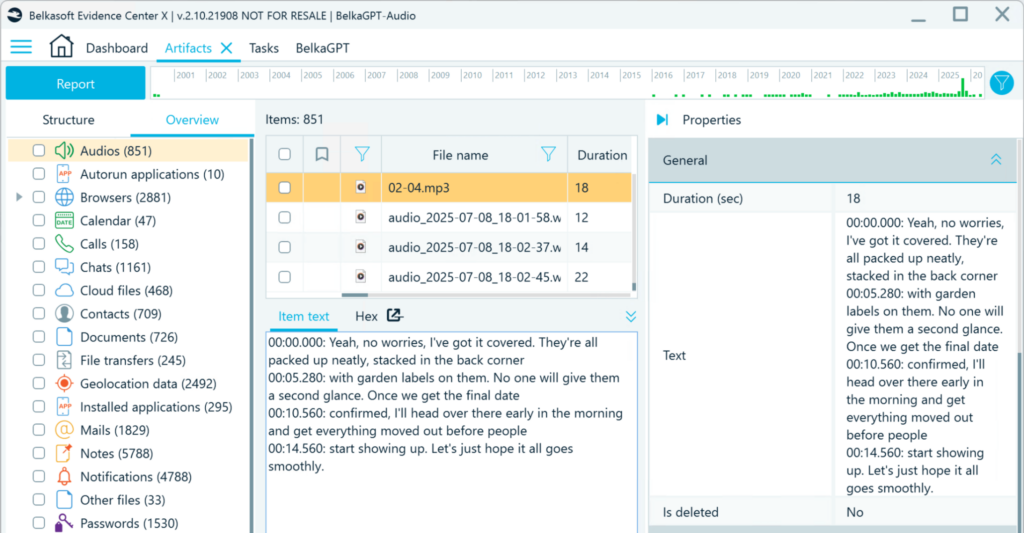
Natural language search on transcripts
Once the recordings are transcribed, researchers can perform searches using natural language. BelkaGPT understands context, so it can identify implied meanings and indirect references, not just exact word matches.
For example, investigators can ask queries such as: “Are there mentions of investment fraud?” or “Find voicemails that contain threats,” and BelkaGPT will retrieve the most relevant results within all the evidence in the case.
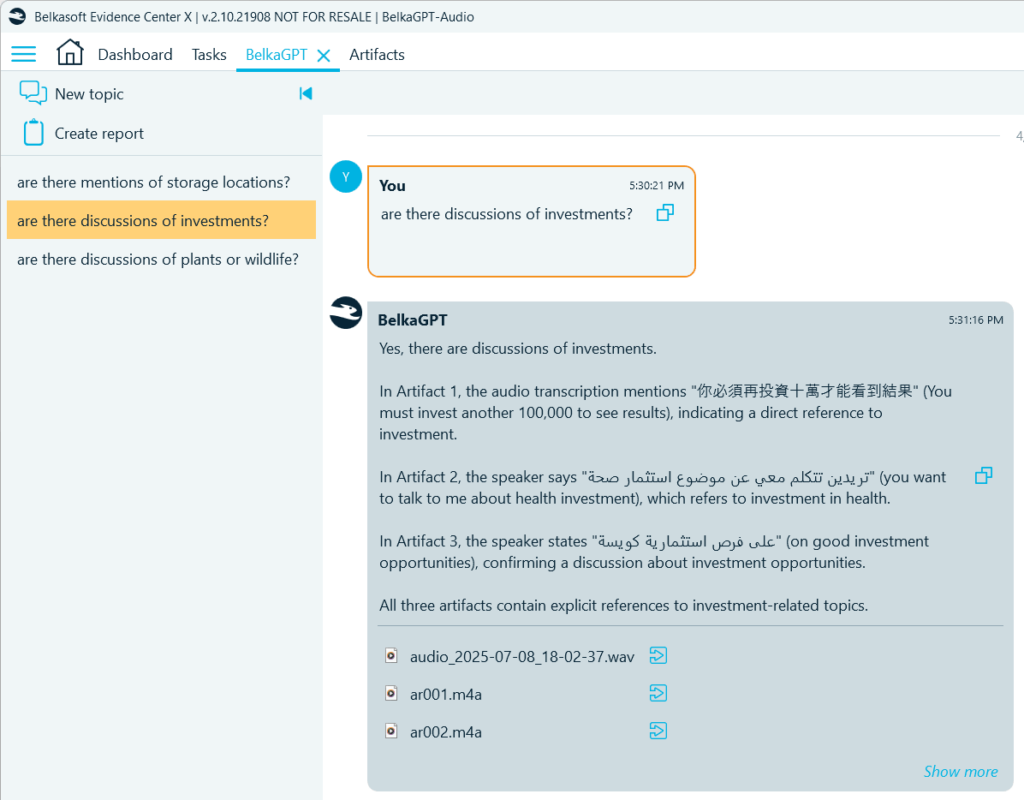
Multilingual evidence discovery
In multilingual research, BelkaGPT's ability to query transcripts in different languages is a significant advantage. The article includes a practical example that demonstrates how searching in the same language as the target content—rather than defaulting to English—can uncover evidence that might otherwise go undetected.